
Inspections and technical assessment
Survey of installed systems, identification of visible gaps and organization of priorities for upgrades and maintenance.
SATO Solutions
Fire prevention, detection and suppression design and solutions focused on technical compliance and operational continuity.
Service scope
We assess existing systems and plan prevention, detection, suppression and evacuation solutions based on occupancy, risks and applicable requirements.
Survey of installed systems, identification of visible gaps and organization of priorities for upgrades and maintenance.
Development or update of technical fire-protection documentation, considering the building and applicable local requirements.
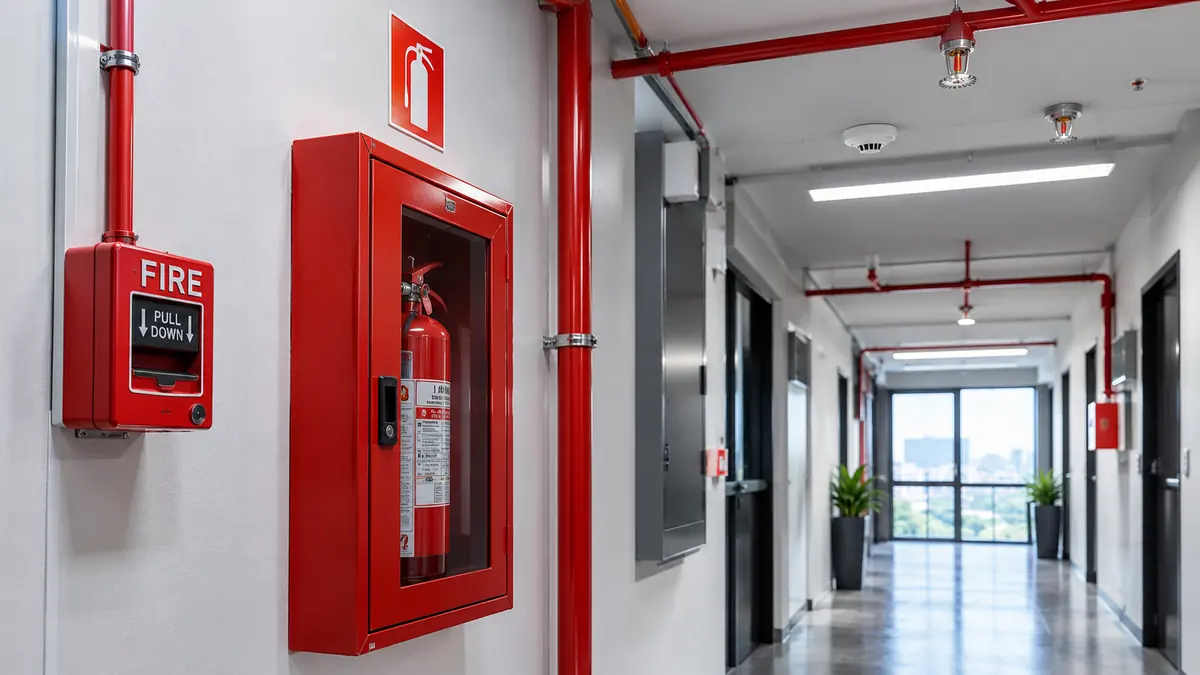
Assessment and specification of control panels, detectors, manual call points and audible/visual alarms according to risk and site layout.
Solutions may include hydrants, sprinklers, extinguishers and specialized suppression agents, selected after technical assessment of occupancy and protected assets.
Review of emergency lighting and signage, exits and other elements related to wayfinding and safe evacuation.
Review of lightning protection, grounding and surge protection aspects, plus maintenance plans and inspection records for covered systems.
Business outcomes
Each building has its own conditions and requirements. Solutions must be confirmed through technical assessment and applicable local regulations.
The survey organizes available information about systems, records, condition and items that require verification.
Recommendations help plan interventions, investment and delivery stages based on identified criticality.
Agreed records, drawings and reports support maintenance, facilities management and inspection preparation.
Complete solutions for regularization, retrofit and safety assurance in commercial and industrial facilities.
Fire protection technologies
The right system depends on the risk, the contents and the type of operation. These are the technologies we specify in design and supervise on site.
Continuously draws air through piping and analyzes it in a laser chamber, identifying combustion particles before visible smoke exists.
Panels that pinpoint the exact source of an alarm, integrating smoke and heat detectors, manual call points and audible signaling.
Cameras running deep learning algorithms recognize smoke and flame across open areas that point sensors cannot cover.
Gases that extinguish by molecular cooling, leaving no residue and causing no damage to servers or electronic panels.
High-pressure mist that cools using a fraction of the water of a conventional sprinkler, reducing flood damage.
Bulb sprinklers for general use and ESFR for high-ceiling warehouses with racking, where the thermal column demands greater flow.
Hydraulic network, fire water reserve, pumps, cabinets and extinguishers sized by the building's risk class.
Deluge for high-risk areas; pre-action with double confirmation, eliminating accidental discharge in data rooms, archives and collections.
Self-contained units, photoluminescent signage and sizing of escape routes, including exits and fire doors.
Devices that identify arcing in damaged conductors inside walls and cut the circuit before ignition.
Franklin rods or Faraday cage, grounding mesh and surge protective devices in switchboards, diverting the discharge away from the structure.
Connected panels with remote alerts and intervention history: pump pressure, faulty detectors and recharge due dates in a single view.
How we work
A fixed sequence, with a responsible engineer and documentation at every stage — that is what makes the timeline predictable.
Site visit, risk survey and verification of what is already installed and what has expired.
Executive design following ABNT standards and the state fire department's regulations, with technical responsibility registered at CREA.
Deployment supervised by a responsible engineer, within agreed work windows so the operation keeps running.
Issue of the technical report, support during the fire department inspection and delivery of the complete documentation.
Talk to our team
Tell us about your environment, challenge or project. Our commercial team can help define the next step.